So, how many people have seen that new Chrysler commercial (how could you miss it?) with Jason Alexander (George Costanza) and Lee Iacocca?
How many of you knew it was Lee Iacocca? It's been, what, 15 years at least since he was in the public eye, hasn't it? What a bizarre cameo. I bet at least two-thirds of the audience won't get it.
13 July 2005


11 July 2005
Yet More about Reporters, Jail, and Free Press
Well well well. Every Presidential administration, it seems, has its scandal. Perhaps this will be the Bush administration’s.
We’ve been following the story of Matt Cooper and Judith Miller now for quite some time. Mr. Cooper, of course, was saved at the last moment by his mysterious source, who allowed Mr. Cooper to divulge the source’s identity to a grand jury. Mr. Cooper did so on Wednesday last week.
Well, since that time Mr. Cooper’s testimony has leaked into the open press. I’m not sure why or how this happened—I was under the impression testimony was to be sealed (this is why we’ve never heard what Bob Novak said to the jury when he squealed his guts out). Evidently that’s either not the case or this particular grand jury has a problem with preventing leaks (a problem the White House was heretofore assumed not to have).
And it turns out Mr. Cooper’s source was none other than (as I said earlier) Karl Rove, the President’s political advisor and patron saint (or patron demon, I suppose). Technically, of course, divulging the identity of a clandestine operative is a federal offense. This makes Karl Rove guilty of said federal offense.
Presumably, Rove said something along the lines of, “You know, Wilson doesn’t even wear the pants in his family. Guess what his wife does?” But he said it to a reporter, and he said it at all. In a White House notorious for keeping a tight lid on information, Karl Rove seems to have been quite cavalier with the identity of CIA operatives who’s husbands happen to be opponents of the administration. Hmm. Think Rove will be indicted? I’m opening the betting with odds at 1:50.
But like any good scandal, this one does involve the prez. Here you’ll find a transcript of a WH press briefing on 29 September, 2003, which is very very long. The first portion of it, though, is all about Valerie Plame, and includes WH press secretary Scott McClellan saying, in response to a question about how the President knew that Karl Rove was not involved, “And I said it is simply not true. So, I mean, it's public knowledge, I've said that it's not true. And I have spoken with Karl Rove.”
So was McClellan lying? Did the President know? If he didn’t, what is Karl Rove doing wandering about chatting up reporters about confidential information in the supposedly leak-proof Bush White House. And is this Bush’s idea of loyalty—or does his idea of loyalty extend only to peoples’ loyalty himself and not to American spies or to the country itself? And if Bush did know, why didn’t he immediately fire Rove, or turn him in to the Department of Justice, as Scott McClellan says should be done?
Interesting. Very interesting. Of course, Judith Miller’s the only one who’s in jail here, and the only thing she did was refuse to subjugate the rights of the free press to a political investigation. As it turns out, if Rove had just turned himself in as McClellan suggested Miller’s involvement wouldn’t have mattered.
Speaking of Judith Miller and the fallout (see yesterday’s post about the Cleveland Plain Dealer of all this, here’s a link to a petition you can sign (if you’re in journalism) in support of a reporter’s shield bill currently making it’s way through Congress. Also, if you support the concept of a free press, write your Congressman and Senators regarding the shield bills. In the House, the bill in question is H.R. 581, the Free Flow of Information Act, sponsored by Reps. Mike Pence and Rick Boucher. In the Senate, there are two bills, S. 340, also the FFIA, sponsored by Sen. Dick Lugar, and S. 369, Free Speech Protection Act, sponsored by Sen. Chris Dodd.
We’ve been following the story of Matt Cooper and Judith Miller now for quite some time. Mr. Cooper, of course, was saved at the last moment by his mysterious source, who allowed Mr. Cooper to divulge the source’s identity to a grand jury. Mr. Cooper did so on Wednesday last week.
Well, since that time Mr. Cooper’s testimony has leaked into the open press. I’m not sure why or how this happened—I was under the impression testimony was to be sealed (this is why we’ve never heard what Bob Novak said to the jury when he squealed his guts out). Evidently that’s either not the case or this particular grand jury has a problem with preventing leaks (a problem the White House was heretofore assumed not to have).
And it turns out Mr. Cooper’s source was none other than (as I said earlier) Karl Rove, the President’s political advisor and patron saint (or patron demon, I suppose). Technically, of course, divulging the identity of a clandestine operative is a federal offense. This makes Karl Rove guilty of said federal offense.
Presumably, Rove said something along the lines of, “You know, Wilson doesn’t even wear the pants in his family. Guess what his wife does?” But he said it to a reporter, and he said it at all. In a White House notorious for keeping a tight lid on information, Karl Rove seems to have been quite cavalier with the identity of CIA operatives who’s husbands happen to be opponents of the administration. Hmm. Think Rove will be indicted? I’m opening the betting with odds at 1:50.
But like any good scandal, this one does involve the prez. Here you’ll find a transcript of a WH press briefing on 29 September, 2003, which is very very long. The first portion of it, though, is all about Valerie Plame, and includes WH press secretary Scott McClellan saying, in response to a question about how the President knew that Karl Rove was not involved, “And I said it is simply not true. So, I mean, it's public knowledge, I've said that it's not true. And I have spoken with Karl Rove.”
So was McClellan lying? Did the President know? If he didn’t, what is Karl Rove doing wandering about chatting up reporters about confidential information in the supposedly leak-proof Bush White House. And is this Bush’s idea of loyalty—or does his idea of loyalty extend only to peoples’ loyalty himself and not to American spies or to the country itself? And if Bush did know, why didn’t he immediately fire Rove, or turn him in to the Department of Justice, as Scott McClellan says should be done?
Interesting. Very interesting. Of course, Judith Miller’s the only one who’s in jail here, and the only thing she did was refuse to subjugate the rights of the free press to a political investigation. As it turns out, if Rove had just turned himself in as McClellan suggested Miller’s involvement wouldn’t have mattered.
Speaking of Judith Miller and the fallout (see yesterday’s post about the Cleveland Plain Dealer of all this, here’s a link to a petition you can sign (if you’re in journalism) in support of a reporter’s shield bill currently making it’s way through Congress. Also, if you support the concept of a free press, write your Congressman and Senators regarding the shield bills. In the House, the bill in question is H.R. 581, the Free Flow of Information Act, sponsored by Reps. Mike Pence and Rick Boucher. In the Senate, there are two bills, S. 340, also the FFIA, sponsored by Sen. Dick Lugar, and S. 369, Free Speech Protection Act, sponsored by Sen. Chris Dodd.
Law Schools
Okay, so today at work using an exhaustive list of numerous criteria, I narrowed down my law school search. Now, you may ask how the following list of 22 schools constitutes “narrowing down,” but considering that I started with about 100, I think I did pretty good. And several of these will drop off the list very quickly. Plus there’s the little matter of, er, strategery, when it comes to applying. Since the AF gets to pick where I go, I have to choose wisely when applying. I’d enjoy going to FSU. I’m sure it would be a good school. But I also strongly suspect that if I applied to FSU, the AF would tell me to go to FSU because it’s very inexpensive. So my safety school, as it were, may well be not very safe at all. We’ll see.
Here’s the list. Please make comments, make fun of a school, or suggest one.
University of North Carolina, Chapel Hill
University of Tennessee, Knoxville
Washington & Lee, Lexington VA
University of Texas, Austin
Boalt Hall, University of California, Berkeley
The George Washington University, DC
University of Alabama, Tuscaloosa
University of Virginia, Charlottesville
Emory University, Atlanta
Florida State University, Tallahassee
Georgia State University, Atlanta
Georgetown University, DC
Stanford University, Stanford CA
American University Washington School of Law, DC
University of Wyoming, Laramie
George Mason University, Arlington VA
University of Hawai’i at Manoa Richardson School of Law, Oahu
Lewis & Clark School of Law, Portland
Stetson University, Tampa & St. Petersburg
University of William & Mary, Williamsburg VA
University of Mississippi, Oxford
University of South Carolina, Columbia
Here’s the list. Please make comments, make fun of a school, or suggest one.
University of North Carolina, Chapel Hill
University of Tennessee, Knoxville
Washington & Lee, Lexington VA
University of Texas, Austin
Boalt Hall, University of California, Berkeley
The George Washington University, DC
University of Alabama, Tuscaloosa
University of Virginia, Charlottesville
Emory University, Atlanta
Florida State University, Tallahassee
Georgia State University, Atlanta
Georgetown University, DC
Stanford University, Stanford CA
American University Washington School of Law, DC
University of Wyoming, Laramie
George Mason University, Arlington VA
University of Hawai’i at Manoa Richardson School of Law, Oahu
Lewis & Clark School of Law, Portland
Stetson University, Tampa & St. Petersburg
University of William & Mary, Williamsburg VA
University of Mississippi, Oxford
University of South Carolina, Columbia
Stuff into kilns
Last night I went out to the studio to do some glazing, and it turned out the folks were loading up the salt kiln. I asked if I could help, and they gave me the task of mixing up fresh kiln wadding. Wadding is a 50/50 mix of clay and alumina hydroxide, mixes up like a gritty bread dough—well, not a bread dough you’d want to eat, but you get the idea. Maybe it’s like Play-doh. Anyway, the alumina in the mix means that it won’t vitrify (get melty and hard like clay) until about 3000 degrees, way hotter than the kiln will get. That way it won’t stick to the pots or the clay kiln shelves, and the salt won’t stick to the wadding, either. So you put wadding on the bottoms of your pots and set the pots on the shelves and off you go.
Nobody likes mixing up wadding, but it’s just the type of mindless repetitive task that my ADD-addled brain likes to do while relaxing, so I was more than willing. I’m almost positive that as a result of doing the unpleasant task, I got more pots into the salt kiln than I might have otherwise. I had 21 pots on the shelf for firing. I took four of them off and put them on the wood-fire shelf, and there are five left for the next salt firing. So that’s 13 pots I have in the kiln, which is pretty good. Oughtta work all right for the big sale next weekend.
09 July 2005
More Reporters in Jail Fallout
There's a very important article today in the New York Times about the results of the Matt Cooper/Judy Miller affair (which is what it is now, rather than the Valerie Plame affair). It seems that the widely respected Cleveland Plain Dealer has decided not to publish two stories that were written after a reporter was given two memos that should never have been given to the reporter. The publisher of the paper says that his reporter was willing to go to jail over it, he himself was willing to go to jail over it, but the paper itself wasn't willing to take the risk (the risk that they might have to pay a fine).
With the rise of the semi-journalistic blog (all hard news all the time, as we saw Thursday and Friday with the net-wide insistence that Rehnquist was going to retire from the Court as soon as Bush's plane landed Friday afternoon at 4'15; nobody retracted their statements, but when it didn't happen, they just stopped talking about it), and the creeping restriction of the freedoms of the legitimate (print) press, I fear we're now seeing the last days of even remotely trustworthy journalism.
In any event this is a very, very important article, and you very much need to read it, and then send it to all your friends and relatives, too.
With the rise of the semi-journalistic blog (all hard news all the time, as we saw Thursday and Friday with the net-wide insistence that Rehnquist was going to retire from the Court as soon as Bush's plane landed Friday afternoon at 4'15; nobody retracted their statements, but when it didn't happen, they just stopped talking about it), and the creeping restriction of the freedoms of the legitimate (print) press, I fear we're now seeing the last days of even remotely trustworthy journalism.
In any event this is a very, very important article, and you very much need to read it, and then send it to all your friends and relatives, too.
06 July 2005
Pottery Pictures
Who wants to see pictures of pots? Everybody, that’s who! Especially if you were even remotely intrigued by the idea of the grotesque I mentioned in an earlier post. Angela in particular should take a look at the pictures and choose one she particularly likes. The pics and info are posted after the jump.
So here they are. Any family members (including Elm Street) have the right to request a piece should they like one (not one of the particularly extravagant ones, of course), or to commission a piece instead. Any non-family members have the right to request to purchase one.
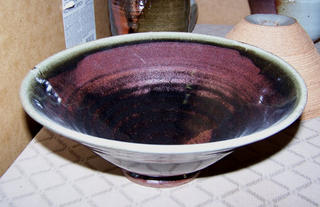 This first is a temmoku glazed bowl about 10 inches across. It was a nice piece before I glazed it; now it’s the most expensive thing on my shelves. Shiny things sell for more. I used this glaze on my tea mug and have received several compliments today at work.
 Next we have a selection of items that are already for sale. Two vases in back, two cockroach traps in the middle. The bowl in the back is very attractive but the glaze on the left did not seal so it isn’t usable for food. The cockroach trap on the left is sized for Florida cockroaches, though the clay body on the smaller one is much nicer. These cockroach traps were made in the Mid-Atlantic area from the 1840s on to about the 1880s or so, when they were replaced by cheaper metal devices and chemicals. The way they worked was, you cork the hole in the bottom there, then fill the trap part way with a mixture of molasses and water. The roaches are attracted by the bait, climb up the rough unglazed exterior, and slip down the glazed downward slope into the trap. The inside is glazed smooth and the cockroach is unable to escape. Every week or so you pull the cork out and empty the trap.
 Here we have three cups. They all turned out pretty nice. The one in the foreground is priced at $18, which I thought seemed really steep but the owner of the studio said it was exactly right. In the middle is a cup that was extremely plain, so plain as to be quite boring and I figured what better to do with it than apply a very boring glaze. I really rather like the outcome; the glaze in question has become one of my favorites. In the back is a smaller cup with a very unique foot that was, sadly, more or less hidden by the amber celadon glaze.
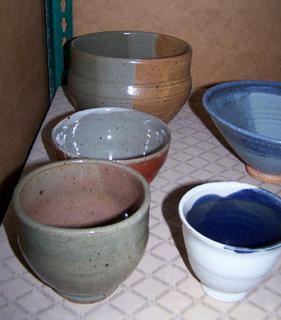 Now on the lower shelf we have some bowls. The one in back is big and heavy and not that nice. The one in front is glazed with Apple Blossom, my own glaze, and has a really terrific foot that the other potters are jealous of. It’s also more expensive than I think it should be, but what the hell. If it sells, it sells. The one in the middle, on the other hand, has a horrible carbon trap shino glaze on the outside and looks like a tomato that sat out in the sun too long. I'll be happy when it finally sells.
 The blue bowl here is one I made for myself, but I’m not as big on the glaze so it’s for sale. It has a terrific foot, cut like a diamond. The two little cups in front are glazed with a nickel blue celadon I invented. I like this glaze, but the nickel in the glaze has the unfortunate effect of floating to the surface of the glaze, so it always looks somewhat dusty.
 A chicken. This is unglazed; it’s going to go into a Japanese Anagama kiln, which should give it a nice multi-colored effect. I find chickens inherently funny. This one came from a bowl I had thrown whose sides folded in because I made them too thin. Just in looking at the fallen bowl, I realized it was clearly a chicken. There will be more chickens. There must be.
 A bowl, unglazed. This one has a foot similar to the blue bowl you saw earlier, and I intend to glaze it with the temmoku glaze I used on the first bowl. And then I’m going to take it home.
 An unglazed 11-inch platter. I’ve never made a plate before, and for a first attempt, I’m quite happy with how this turned out. It has no foot and doesn’t sit entirely flat, but it’s nice all the same. Now I just have to try for one about twice that size.
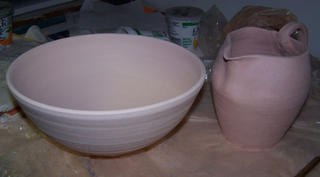 A bowl and a hideous ugly pitcher, both unglazed. I might raku fire the pitcher, or wood fire or something. Anything to make it even half attractive. To be honest I'm not sure why I kept the thing, but it's bisqued now and needs to be finished. Eventually. The bowl, on the other hand, is quite nice.
 Two more bowls. The one in back is much larger than the one in front, appearances to the contrary. Also unglazed. The one in back could have become a chicken if I'd been able to make the other side of it curl in like that. As it is it's more of a display or conversation piece than a useful piece of pottery, and as such is not the sort of thing I generally like to produce. The one in front has a nice shape but is somewhat heavy. I think I may raku fire it, as despite its size it at least has a very nice tea bowl sort of shape and should lend itself well to a raku firing. The one in back will probably get a celadon blue or something exotic to add interest and make it more saleable.
 A milk crock, a toy jar, and an urn; these are raw clay, haven’t even been bisqued yet. The crock is about 14 inches tall including the lid. The urn has a lid with a tiny little jug on it, just about an inch tall. I think it’s the smallest jug ever made and was very time consuming; the urn will as a result be very expensive. You can see my groovy stamp there on the bottom of the larger items--or at any rate you could if these pictures were larger. Rest assured it is quite groovy.
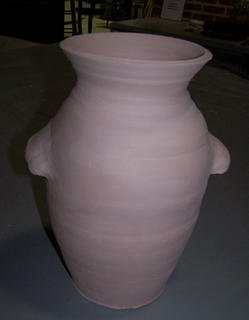
 A simple unglazed jar of some sort, with no handles. About 10 inches. It's a very nice shape, but would have benefitted from two basic lugs, or perhaps a lid. As it is I think it will probably be relegated to the category "vase," a wide and disparate category containing any number of things you'd never use as vases. Vases are the tall versions of ashtrays. I don't know what you'd do with them. I'd say that if it doesn't sell I'd bring it home and use it to store old wine corks in, but it's very pretty and I suspect will sell right away. As is so frequently the case, the pieces I like the least are considered by my fellow studio artists to be the best or, at any rate, the ones most likely to sell. I think I put this one in to salt fire, but given the purple vase you'll see down below I wonder whether perhaps this one would be better with a similar glaze.
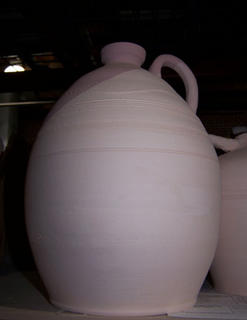 An extremely large jug after the Virginia style. I usually stay in the North and South Carolina regions for most of my inspiration (see the book Turners and Burners on my book list), but this jug more or less turned itself and I had very little say in the final outcome. It's about 1.5 gallons. I’m exceedingly proud of this piece and can’t wait for it to fire; I think it might be my very favorite of all the ones shown here.
The jug here is as I said Virginian. The jug pictured below is a North Carolina jug; note the differences between overall shape and especially the placement of the handles. These regional variations are very important to figuring out where an old piece of pottery comes from, should you ever wish to do such a thing. Of course I'd suggest you just buy new pottery from me...
 A jar and a jug, glazed and awaiting firing. The jar is about a gallon, the jug should be ¾. This is a North Carolina jug shape. This jug, and most all of the rest of my jugs, are shapes from about 1850 to 1880. After 1880 sides became straighter and the tops flatter, until by the 1920s you see the standard brown-on-top-white-on-bottom straight sided jug with a stacking flare. I see these types of things on sale on eBay from time to time as “Over 100 years old!” despite the fact that the form didn’t arise until mass storage and shipping requirements came about after the turn of the century.
 More jugs, some rather small, glazed and awaiting firing. The fat little belly jug on the left there is a New England form (sorry about the handle not facing the camera and all). Jugs were not as common for storage in the northeast as they were south of the Mason Dixon line, though this actually has more to do with the ability of the jug form to keep things cool on hot days than with the Southern taste for whisky. Jugs were good for keeping far more than just whisky, not to disparage that fine libation.
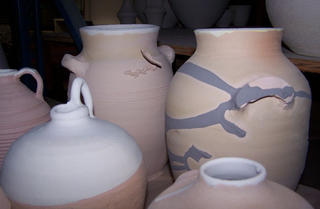 Two jars awaiting firing. All these things will be salt fired so as to look appropriately authentic. The drip glaze on the near jar is the nickel blue, which should look great under salt. The little curlicue on the back jar is a piece of clay I trimmed off the bottom of the jar. It looked cool, so I stuck it on; it may not survive the firing. These jars are not more than a gallon, probably slightly less. Jars from a half up to five gallons were standard production pieces; some potters turned 10 or 15 gallon jugs, though these were too heavy when full to be useful and were mostly used as advertising items.
 The first large jug I ever made; 1 gallon. More nickel blue glaze. This jug is extremely heavy because I initially intended to trim some amount of clay off the bottom. However, I also didn't really intend to turn a jug this size; I figured I'd make two or three things out of the lump of clay I started with, so I left plenty at the bottom. I figure, though (I'm so naughty), that most people won't know the difference, especially if that nickel blue looks good.
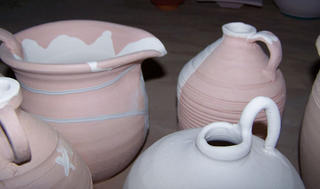 Some smaller items awaiting firing. The pitcher there is about the second successful piece I made after getting back in the studio this spring following a six-year absence. It's not a terrific item, but lots of people seem to like it and I've grown rather more fond of it. The little jug there in the extreme foreground to the left has some white X's carved into it with white glaze painted in. People want jugs to have X's on them, though in reality a jug was far more likely to have a number on it indicating its gallon capacity. These jugs are all one quart or less, though, so X's will have to suffice.
 A pickle jar. I absolutely adore this form and plan to make lots more. I’ve been making pickles at home lately, and I look forward to using a jar like this for the intended purpose. I find balsamic vinegar (which recipe books say you must never, ever use) makes really awesome pickles without any refrigeration at all. Simply put the cucumbers, cauliflower, or what-have-you (watermelon rind, maybe?) into the jar with straight balsamic vinegar, a bit of olive oil, and pickling spice. Leave it on the counter for two, maybe three days, then pour out the mixture through a sieve. Put the pickles in the jar, and fill with water and about a tablespoon or so of vinegar; float the pickling spice from the sieve in the mixture, and the pickles will keep in the fridge for months. Mmm. They're sweet and salty at the same time; very different from any pickle you're used to.
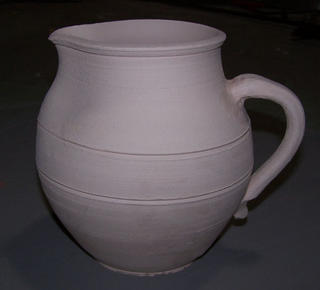 A nice pitcher that will salt fire. I really like this one but I’m afraid leaving it unglazed during the salt firing will make it a uniform brown. I couldn’t think what else to do with it, though; I'd considered dipping part of it in white or blue glaze, but it didn't seem right. This pitcher should be good for about a half gallon; the handle is nice and sturdy, and though things change during firing as of right now the spout pours very nicely. I may wood fire this piece, rather than salt fire it, since wood might tend to put more color on the surface.
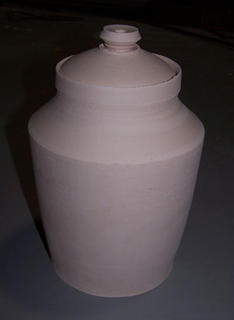 A milk crock, freakishly smooth. Curious to see how well the salt sticks to it. I threw this one using two ribs instead of a sponge, and the result is... well, it looks almost machined. Maybe poured into a mould or something. Anyway, the lid there is one of the first I'd made in many years and I think turned out very nice all things considered.
 Two jugs awaiting glaze. These are two different clay bodies, but I’m not at all sure what clay bodies they are. These are about half to three-quarter gallon jugs. They're both Carolina-inspired, but note the difference in handle placement and body shape between the jug on the left (Piedmont) and the one of the right (South Carolina). As a rule I prefer the Piedmont style handle but the South Carolina shape.
 A nice slender jug. It’s got a strong copper glaze on the top of it now, should look real nice when it comes out of the kiln. I hope. Note to the fair AMS, if you don’t like another piece better, this is the one I had in mind for you.
 A two gallon jar with very unfortunate handles. I've since learned to make much nicer lug handles, which you can see on the crock above (the one pictured with the toy jar and the urn).
 The grotesque! It’s a two gallon jar. His facial features and handles are a different clay body than the jar itself, which, at the time, I did not realize I had done. We’ll see how it looks coming out of the kiln. While numerous other potters have expressed dismay at how, well, ugly this piece is, most of them concede that this will probably sell first and at a ridiculous price. Grotesques (or “face jugs”) are very popular among collectors of old pottery but made up a very small percentage of the potter’s usual production. Mostly they would be made on special order, but sometimes, as in the case here, an off-center or otherwise imperfect jug or jar could be “saved” (that hardly seems the right word) by making it into a grotesque.
 A selection of pieces for size comparison. The grotesque is 15 inches tall.
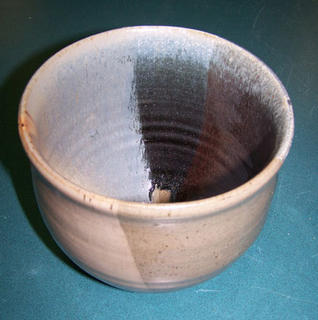 A large vase I just pulled out of the kiln with very intriguing glaze. I like these triple-dip things, where I can see what different glazes do in reaction with others.
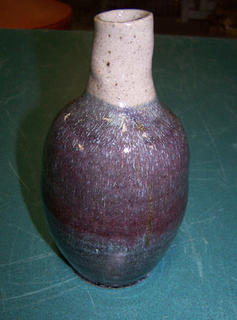 A smaller, partially-destroyed vase I just got out of the kiln. I’ve never made a purple glaze before, though I have tried several times. This was a very nice little piece (about eight inches tall) when I threw it, but I trimmed it upside down (which seemed like a good idea at the time) in an effort to give it a foot, and ended up warping it. Some quick handbuilding saved the piece, but it’s no longer as pretty or regular as it was. The purple glaze, which was not my intention and which I have no idea how I produced, makes this a much nicer piece than I ever would have hoped.
So there you have it. I’ll have more pictures as these items come out of the kilns and as I make new stuff.
So here they are. Any family members (including Elm Street) have the right to request a piece should they like one (not one of the particularly extravagant ones, of course), or to commission a piece instead. Any non-family members have the right to request to purchase one.
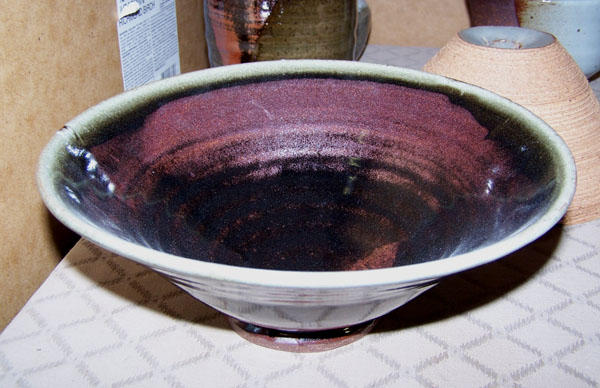 This first is a temmoku glazed bowl about 10 inches across. It was a nice piece before I glazed it; now it’s the most expensive thing on my shelves. Shiny things sell for more. I used this glaze on my tea mug and have received several compliments today at work.
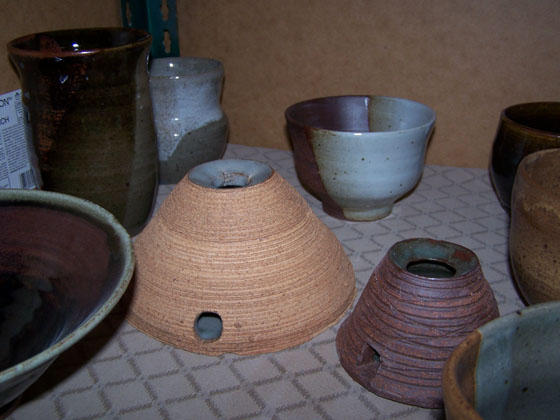 Next we have a selection of items that are already for sale. Two vases in back, two cockroach traps in the middle. The bowl in the back is very attractive but the glaze on the left did not seal so it isn’t usable for food. The cockroach trap on the left is sized for Florida cockroaches, though the clay body on the smaller one is much nicer. These cockroach traps were made in the Mid-Atlantic area from the 1840s on to about the 1880s or so, when they were replaced by cheaper metal devices and chemicals. The way they worked was, you cork the hole in the bottom there, then fill the trap part way with a mixture of molasses and water. The roaches are attracted by the bait, climb up the rough unglazed exterior, and slip down the glazed downward slope into the trap. The inside is glazed smooth and the cockroach is unable to escape. Every week or so you pull the cork out and empty the trap.
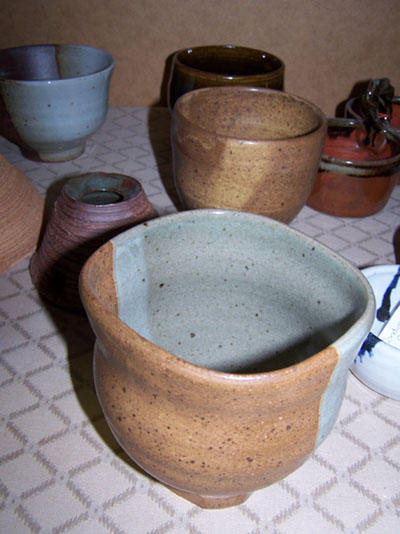 Here we have three cups. They all turned out pretty nice. The one in the foreground is priced at $18, which I thought seemed really steep but the owner of the studio said it was exactly right. In the middle is a cup that was extremely plain, so plain as to be quite boring and I figured what better to do with it than apply a very boring glaze. I really rather like the outcome; the glaze in question has become one of my favorites. In the back is a smaller cup with a very unique foot that was, sadly, more or less hidden by the amber celadon glaze.
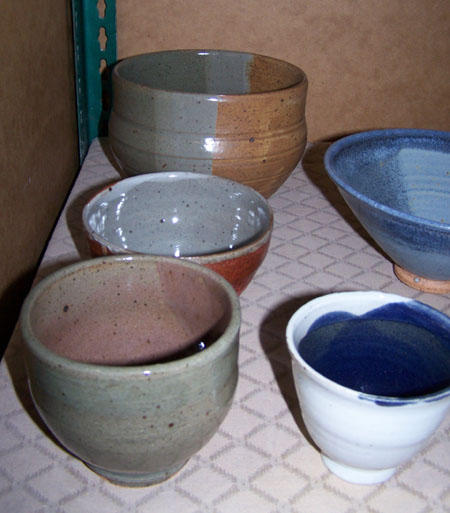 Now on the lower shelf we have some bowls. The one in back is big and heavy and not that nice. The one in front is glazed with Apple Blossom, my own glaze, and has a really terrific foot that the other potters are jealous of. It’s also more expensive than I think it should be, but what the hell. If it sells, it sells. The one in the middle, on the other hand, has a horrible carbon trap shino glaze on the outside and looks like a tomato that sat out in the sun too long. I'll be happy when it finally sells.
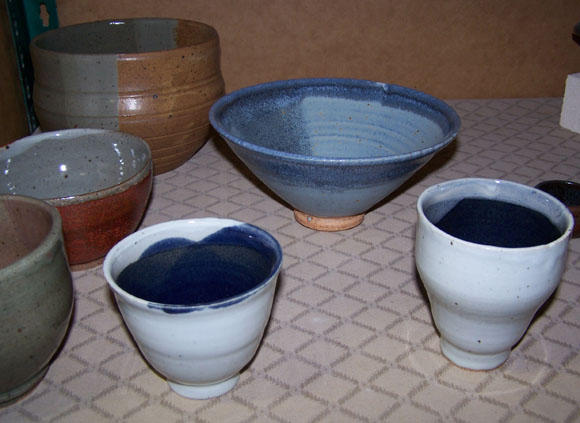 The blue bowl here is one I made for myself, but I’m not as big on the glaze so it’s for sale. It has a terrific foot, cut like a diamond. The two little cups in front are glazed with a nickel blue celadon I invented. I like this glaze, but the nickel in the glaze has the unfortunate effect of floating to the surface of the glaze, so it always looks somewhat dusty.
 A chicken. This is unglazed; it’s going to go into a Japanese Anagama kiln, which should give it a nice multi-colored effect. I find chickens inherently funny. This one came from a bowl I had thrown whose sides folded in because I made them too thin. Just in looking at the fallen bowl, I realized it was clearly a chicken. There will be more chickens. There must be.
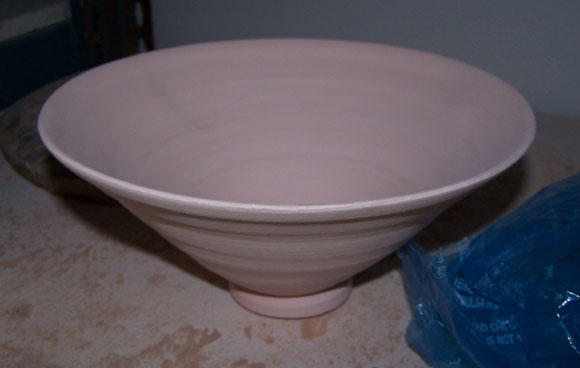 A bowl, unglazed. This one has a foot similar to the blue bowl you saw earlier, and I intend to glaze it with the temmoku glaze I used on the first bowl. And then I’m going to take it home.
 An unglazed 11-inch platter. I’ve never made a plate before, and for a first attempt, I’m quite happy with how this turned out. It has no foot and doesn’t sit entirely flat, but it’s nice all the same. Now I just have to try for one about twice that size.
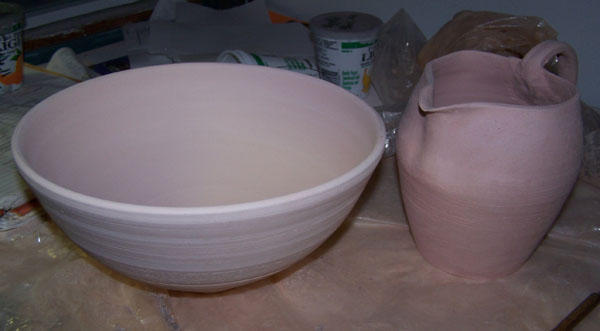 A bowl and a hideous ugly pitcher, both unglazed. I might raku fire the pitcher, or wood fire or something. Anything to make it even half attractive. To be honest I'm not sure why I kept the thing, but it's bisqued now and needs to be finished. Eventually. The bowl, on the other hand, is quite nice.
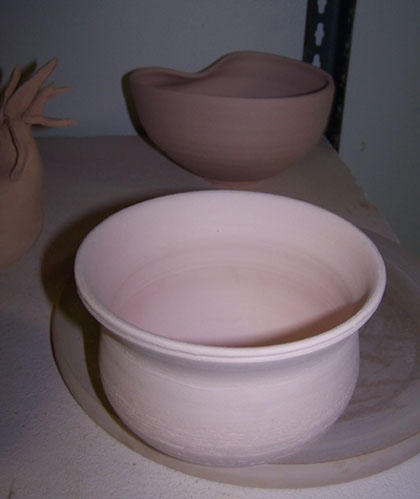 Two more bowls. The one in back is much larger than the one in front, appearances to the contrary. Also unglazed. The one in back could have become a chicken if I'd been able to make the other side of it curl in like that. As it is it's more of a display or conversation piece than a useful piece of pottery, and as such is not the sort of thing I generally like to produce. The one in front has a nice shape but is somewhat heavy. I think I may raku fire it, as despite its size it at least has a very nice tea bowl sort of shape and should lend itself well to a raku firing. The one in back will probably get a celadon blue or something exotic to add interest and make it more saleable.
  A milk crock, a toy jar, and an urn; these are raw clay, haven’t even been bisqued yet. The crock is about 14 inches tall including the lid. The urn has a lid with a tiny little jug on it, just about an inch tall. I think it’s the smallest jug ever made and was very time consuming; the urn will as a result be very expensive. You can see my groovy stamp there on the bottom of the larger items--or at any rate you could if these pictures were larger. Rest assured it is quite groovy.
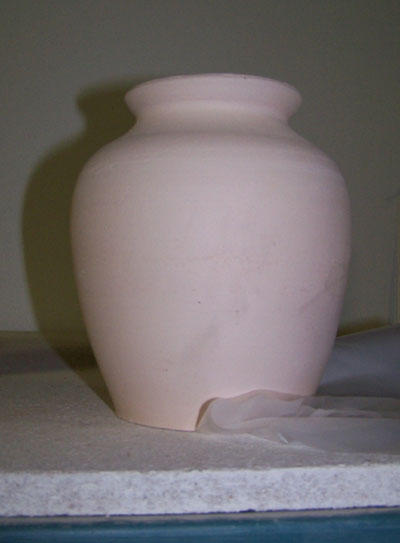 A simple unglazed jar of some sort, with no handles. About 10 inches. It's a very nice shape, but would have benefitted from two basic lugs, or perhaps a lid. As it is I think it will probably be relegated to the category "vase," a wide and disparate category containing any number of things you'd never use as vases. Vases are the tall versions of ashtrays. I don't know what you'd do with them. I'd say that if it doesn't sell I'd bring it home and use it to store old wine corks in, but it's very pretty and I suspect will sell right away. As is so frequently the case, the pieces I like the least are considered by my fellow studio artists to be the best or, at any rate, the ones most likely to sell. I think I put this one in to salt fire, but given the purple vase you'll see down below I wonder whether perhaps this one would be better with a similar glaze.
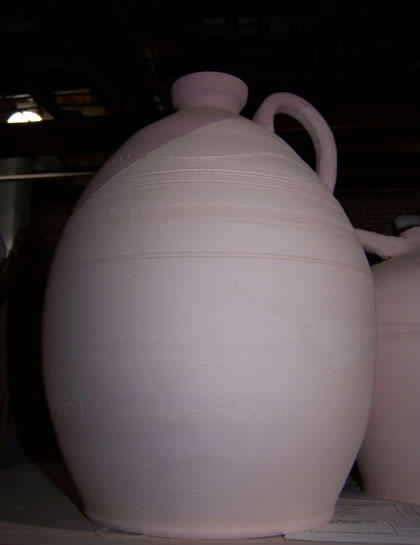 An extremely large jug after the Virginia style. I usually stay in the North and South Carolina regions for most of my inspiration (see the book Turners and Burners on my book list), but this jug more or less turned itself and I had very little say in the final outcome. It's about 1.5 gallons. I’m exceedingly proud of this piece and can’t wait for it to fire; I think it might be my very favorite of all the ones shown here.
 The jug here is as I said Virginian. The jug pictured below is a North Carolina jug; note the differences between overall shape and especially the placement of the handles. These regional variations are very important to figuring out where an old piece of pottery comes from, should you ever wish to do such a thing. Of course I'd suggest you just buy new pottery from me...
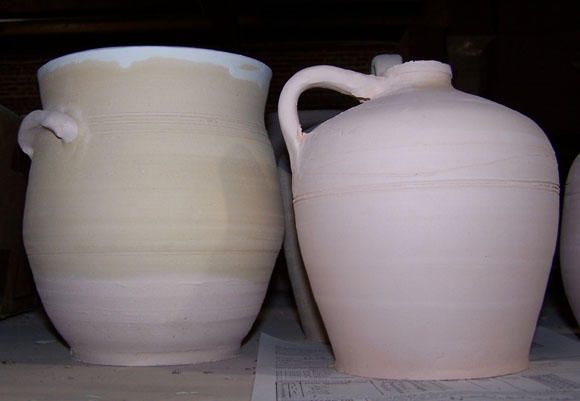 A jar and a jug, glazed and awaiting firing. The jar is about a gallon, the jug should be ¾. This is a North Carolina jug shape. This jug, and most all of the rest of my jugs, are shapes from about 1850 to 1880. After 1880 sides became straighter and the tops flatter, until by the 1920s you see the standard brown-on-top-white-on-bottom straight sided jug with a stacking flare. I see these types of things on sale on eBay from time to time as “Over 100 years old!” despite the fact that the form didn’t arise until mass storage and shipping requirements came about after the turn of the century.
 More jugs, some rather small, glazed and awaiting firing. The fat little belly jug on the left there is a New England form (sorry about the handle not facing the camera and all). Jugs were not as common for storage in the northeast as they were south of the Mason Dixon line, though this actually has more to do with the ability of the jug form to keep things cool on hot days than with the Southern taste for whisky. Jugs were good for keeping far more than just whisky, not to disparage that fine libation.
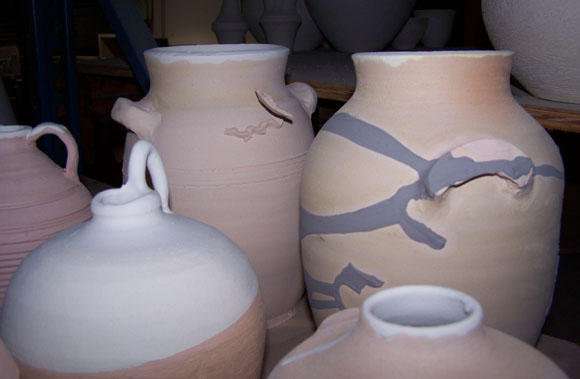 Two jars awaiting firing. All these things will be salt fired so as to look appropriately authentic. The drip glaze on the near jar is the nickel blue, which should look great under salt. The little curlicue on the back jar is a piece of clay I trimmed off the bottom of the jar. It looked cool, so I stuck it on; it may not survive the firing. These jars are not more than a gallon, probably slightly less. Jars from a half up to five gallons were standard production pieces; some potters turned 10 or 15 gallon jugs, though these were too heavy when full to be useful and were mostly used as advertising items.
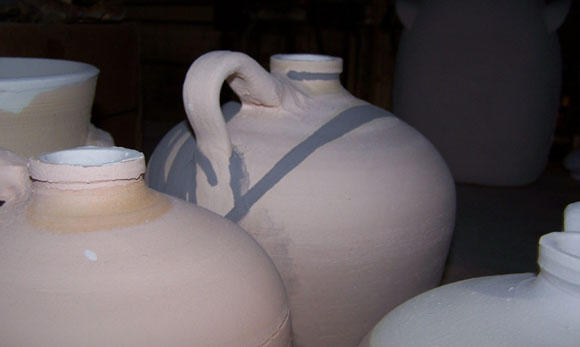 The first large jug I ever made; 1 gallon. More nickel blue glaze. This jug is extremely heavy because I initially intended to trim some amount of clay off the bottom. However, I also didn't really intend to turn a jug this size; I figured I'd make two or three things out of the lump of clay I started with, so I left plenty at the bottom. I figure, though (I'm so naughty), that most people won't know the difference, especially if that nickel blue looks good.
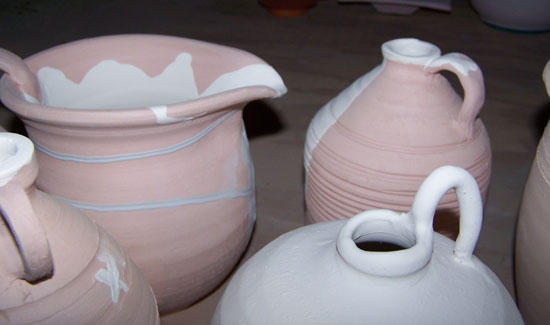 Some smaller items awaiting firing. The pitcher there is about the second successful piece I made after getting back in the studio this spring following a six-year absence. It's not a terrific item, but lots of people seem to like it and I've grown rather more fond of it. The little jug there in the extreme foreground to the left has some white X's carved into it with white glaze painted in. People want jugs to have X's on them, though in reality a jug was far more likely to have a number on it indicating its gallon capacity. These jugs are all one quart or less, though, so X's will have to suffice.
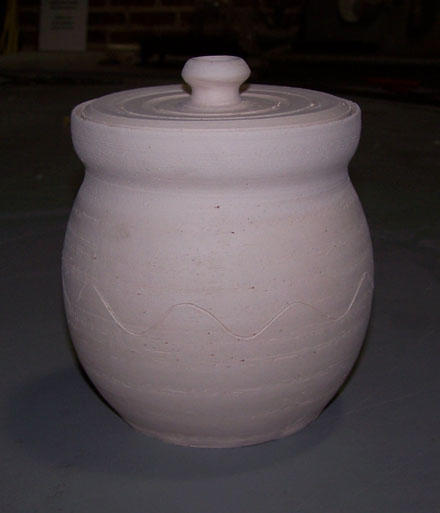 A pickle jar. I absolutely adore this form and plan to make lots more. I’ve been making pickles at home lately, and I look forward to using a jar like this for the intended purpose. I find balsamic vinegar (which recipe books say you must never, ever use) makes really awesome pickles without any refrigeration at all. Simply put the cucumbers, cauliflower, or what-have-you (watermelon rind, maybe?) into the jar with straight balsamic vinegar, a bit of olive oil, and pickling spice. Leave it on the counter for two, maybe three days, then pour out the mixture through a sieve. Put the pickles in the jar, and fill with water and about a tablespoon or so of vinegar; float the pickling spice from the sieve in the mixture, and the pickles will keep in the fridge for months. Mmm. They're sweet and salty at the same time; very different from any pickle you're used to.
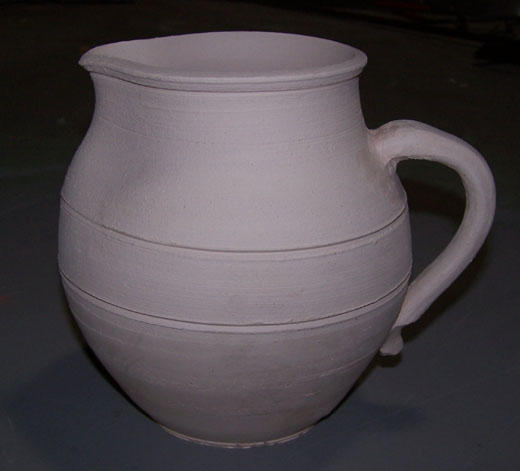 A nice pitcher that will salt fire. I really like this one but I’m afraid leaving it unglazed during the salt firing will make it a uniform brown. I couldn’t think what else to do with it, though; I'd considered dipping part of it in white or blue glaze, but it didn't seem right. This pitcher should be good for about a half gallon; the handle is nice and sturdy, and though things change during firing as of right now the spout pours very nicely. I may wood fire this piece, rather than salt fire it, since wood might tend to put more color on the surface.
 A milk crock, freakishly smooth. Curious to see how well the salt sticks to it. I threw this one using two ribs instead of a sponge, and the result is... well, it looks almost machined. Maybe poured into a mould or something. Anyway, the lid there is one of the first I'd made in many years and I think turned out very nice all things considered.
 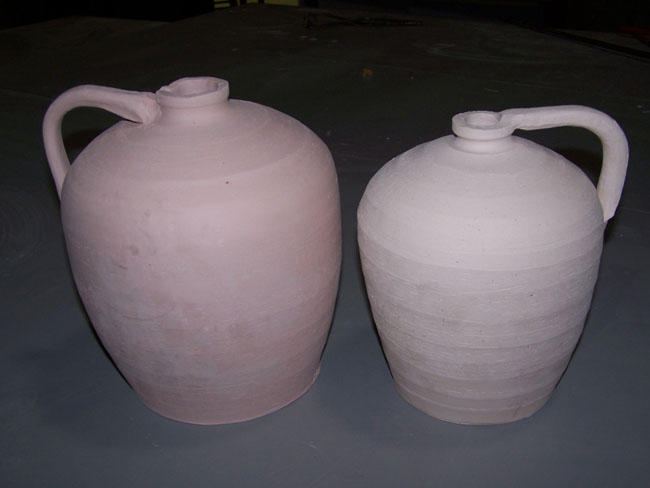 Two jugs awaiting glaze. These are two different clay bodies, but I’m not at all sure what clay bodies they are. These are about half to three-quarter gallon jugs. They're both Carolina-inspired, but note the difference in handle placement and body shape between the jug on the left (Piedmont) and the one of the right (South Carolina). As a rule I prefer the Piedmont style handle but the South Carolina shape.
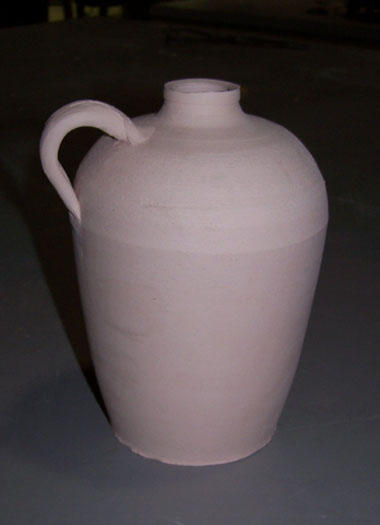 A nice slender jug. It’s got a strong copper glaze on the top of it now, should look real nice when it comes out of the kiln. I hope. Note to the fair AMS, if you don’t like another piece better, this is the one I had in mind for you.
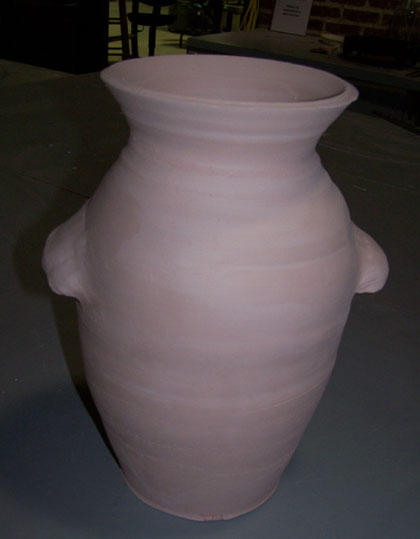 A two gallon jar with very unfortunate handles. I've since learned to make much nicer lug handles, which you can see on the crock above (the one pictured with the toy jar and the urn).
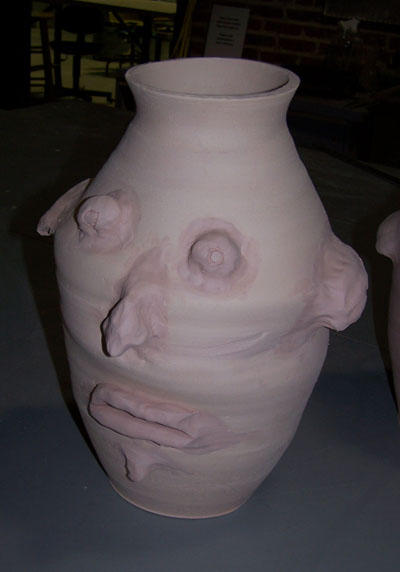 The grotesque! It’s a two gallon jar. His facial features and handles are a different clay body than the jar itself, which, at the time, I did not realize I had done. We’ll see how it looks coming out of the kiln. While numerous other potters have expressed dismay at how, well, ugly this piece is, most of them concede that this will probably sell first and at a ridiculous price. Grotesques (or “face jugs”) are very popular among collectors of old pottery but made up a very small percentage of the potter’s usual production. Mostly they would be made on special order, but sometimes, as in the case here, an off-center or otherwise imperfect jug or jar could be “saved” (that hardly seems the right word) by making it into a grotesque.
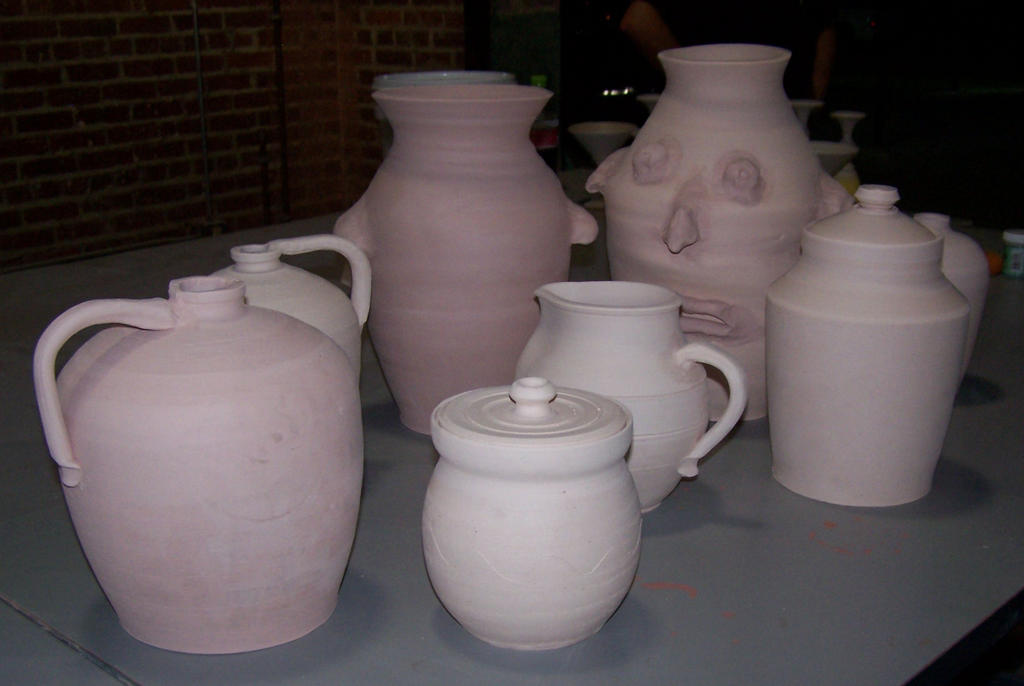 A selection of pieces for size comparison. The grotesque is 15 inches tall.
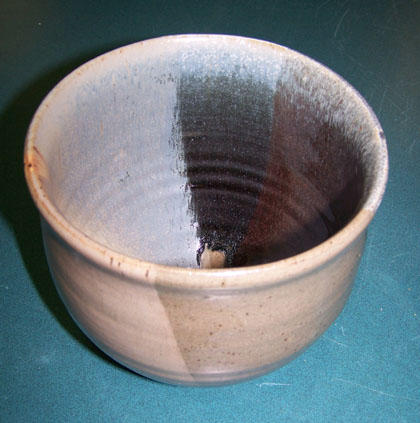 A large vase I just pulled out of the kiln with very intriguing glaze. I like these triple-dip things, where I can see what different glazes do in reaction with others.
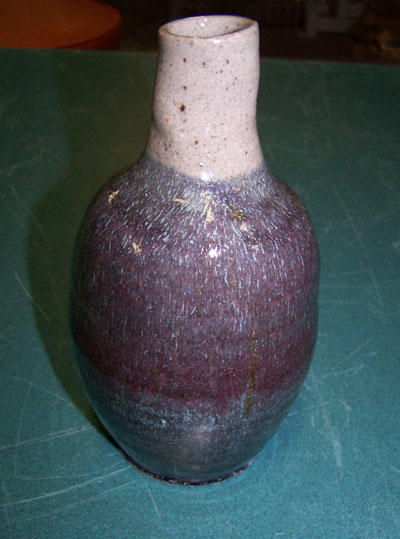 A smaller, partially-destroyed vase I just got out of the kiln. I’ve never made a purple glaze before, though I have tried several times. This was a very nice little piece (about eight inches tall) when I threw it, but I trimmed it upside down (which seemed like a good idea at the time) in an effort to give it a foot, and ended up warping it. Some quick handbuilding saved the piece, but it’s no longer as pretty or regular as it was. The purple glaze, which was not my intention and which I have no idea how I produced, makes this a much nicer piece than I ever would have hoped.
So there you have it. I’ll have more pictures as these items come out of the kilns and as I make new stuff.
Supreme Court must-reads
Today brought a couple of must-read items about the choosing of a replacement for Supreme Court Justice Sandra Day O’Connor. First among these is this a Gallup poll asking Americans how much the choice for the next Justice matters to them. Somewhat surprisingly, nearly half of all adults say it matters a “great deal,” which is far higher a number than I would have suspected—and certainly, I would argue, a far higher percentage than the actual percentage of people who will follow the developments with anything like a critical eye.
Fully half of both Democrats and Republicans said the nomination matters a great deal. 55 percent of self-described conservatives, and 56 percent of liberals, said the same. What’s troubling is that among independents, only 45 percent gave the “great deal” response, and only 40 percent of self-described moderates.
Moderates, listen up. This court, right now, is moderate. You may not think it matters, but if you like centrism you need to watch this thing very closely, since it will be a simple matter to dramatically shift the balance of this court following Justice O’Connor’s replacement. Unfortunately, we can’t count on anyone involved in this process, except perhaps the nominee him- or herself, to put ideology aside. It’s going to get ugly.
There’s more after the jump!
The other interesting point in this poll is that 65 percent of Americans said they would like to see a new Justice who would uphold Roe v. Wade, compared to only 29 percent would like to see it overturned. This will be extremely significant for the President, since he would be very likely to appoint a justice who might overturn Roe (litmus test or not, the type of judge Bush wants to appoint is generally the type of judge who would overturn Roe, Gonzalez excepted), but may be more keen on solidifying the conservative tilt in American politics. Overturning Roe would drive a wedge through the conservative polity and possibly stop the march of the Evangelicals in their tracks. That said, while I think stopping the EVs is good I’m not sure this particular means of doing so is the right way to go about it.
On to the next topic: a must-read entry on the Supreme Court Nomination Blog about how the media will be covering this process. I’d be curious to know whether this is referring to a variety of media outfits, or primarily (as I suspect) to cable television. Cable television really only seems to have three actual news outfits—missing persons, celebrities, and politics—so something that transcends those categories would of course be better covered by another news organization anyway, like the New York Times or some such (but not Time). Anyway, it’s still a must-read post; if nothing else it’s appropriate warning to find a rock to cower under until the storm blows over.
If I was a betting man, I’d have my money on Alberto Gonzalez for win, Priscilla Owen for place, and Edith Jones for show. But I don’t really know anything. Supreme Court nominations often come out of left field, as Justice O’Connor’s did. About half the current members of the Court took pundits by surprise when they were nominated. Conventional wisdom says Bush will very likely nominate a woman for this seat—replacing O’Connor with a male Justice would seem a tad misogynistic. But we know Bush really wants to nominate a Hispanic justice, and we know he’d really like that person to be Alberto Gonzalez. But Gonzalez is considered by the far right to be too centrist in his viewpoint (too much like O’Connor, in other words), and they see this nomination as a chance to move the Court to the right. This improves the odds on someone like Judge Jones. But, replacing Rehnquist with a more moderate person like Gonzalez would then return the court to status quo ante, so you have to wonder whether the righties have really thought this through. This could be why they’re bringing up folks like Mel Martinez and Raoul Cantero. We shall see.
Fully half of both Democrats and Republicans said the nomination matters a great deal. 55 percent of self-described conservatives, and 56 percent of liberals, said the same. What’s troubling is that among independents, only 45 percent gave the “great deal” response, and only 40 percent of self-described moderates.
Moderates, listen up. This court, right now, is moderate. You may not think it matters, but if you like centrism you need to watch this thing very closely, since it will be a simple matter to dramatically shift the balance of this court following Justice O’Connor’s replacement. Unfortunately, we can’t count on anyone involved in this process, except perhaps the nominee him- or herself, to put ideology aside. It’s going to get ugly.
There’s more after the jump!
The other interesting point in this poll is that 65 percent of Americans said they would like to see a new Justice who would uphold Roe v. Wade, compared to only 29 percent would like to see it overturned. This will be extremely significant for the President, since he would be very likely to appoint a justice who might overturn Roe (litmus test or not, the type of judge Bush wants to appoint is generally the type of judge who would overturn Roe, Gonzalez excepted), but may be more keen on solidifying the conservative tilt in American politics. Overturning Roe would drive a wedge through the conservative polity and possibly stop the march of the Evangelicals in their tracks. That said, while I think stopping the EVs is good I’m not sure this particular means of doing so is the right way to go about it.
On to the next topic: a must-read entry on the Supreme Court Nomination Blog about how the media will be covering this process. I’d be curious to know whether this is referring to a variety of media outfits, or primarily (as I suspect) to cable television. Cable television really only seems to have three actual news outfits—missing persons, celebrities, and politics—so something that transcends those categories would of course be better covered by another news organization anyway, like the New York Times or some such (but not Time). Anyway, it’s still a must-read post; if nothing else it’s appropriate warning to find a rock to cower under until the storm blows over.
If I was a betting man, I’d have my money on Alberto Gonzalez for win, Priscilla Owen for place, and Edith Jones for show. But I don’t really know anything. Supreme Court nominations often come out of left field, as Justice O’Connor’s did. About half the current members of the Court took pundits by surprise when they were nominated. Conventional wisdom says Bush will very likely nominate a woman for this seat—replacing O’Connor with a male Justice would seem a tad misogynistic. But we know Bush really wants to nominate a Hispanic justice, and we know he’d really like that person to be Alberto Gonzalez. But Gonzalez is considered by the far right to be too centrist in his viewpoint (too much like O’Connor, in other words), and they see this nomination as a chance to move the Court to the right. This improves the odds on someone like Judge Jones. But, replacing Rehnquist with a more moderate person like Gonzalez would then return the court to status quo ante, so you have to wonder whether the righties have really thought this through. This could be why they’re bringing up folks like Mel Martinez and Raoul Cantero. We shall see.
NY Times Reporter In Clink
A brief post on this developing and disheartening story. Judith Miller, the New York Times reporter who, along with Time's Matt Cooper has been threatened with jail time for failing to reveal a confidential source who gave her information about who (Karl Rove) leaked Valerie Plame's name to Bob Novak, is going to the hoosegow. A federal judge today said that Miller should be jailed "immediately" for failing to reveal her source to a grand jury.
Matt Cooper, meanwhile, got off easy today when his confidential source contacted him and gave him express permission to testify before the grand jury. Cooper's testimony will be heard later this week; provided he answers all the questions they ask him the contempt of court charge against him will be dropped.
Here, straight from the horse's mouth, is a Times article about Miller's imprisonment.
Those who believe that the government bears close scrutiny by a free and independent press are invited to a wake at my house this weekend.
Matt Cooper, meanwhile, got off easy today when his confidential source contacted him and gave him express permission to testify before the grand jury. Cooper's testimony will be heard later this week; provided he answers all the questions they ask him the contempt of court charge against him will be dropped.
Here, straight from the horse's mouth, is a Times article about Miller's imprisonment.
Those who believe that the government bears close scrutiny by a free and independent press are invited to a wake at my house this weekend.
05 July 2005
Totally bragging my ass off
Ahem.
I would like to go ahead and present the following email which I received today from Lewis & Clark Law School in Portland, Oregon. Being that it's in Portland it's not really a place I'd considered. In fact, I'm not entirely sure I've ever heard of it, since I've only actually even thought about maybe three schools west of the Mississippi (I like the West, but I was born an Easterner and I reckon I'll die one, too, unless I'm on vacation or something when I die, which really still wouldn't make me a Westerner).
Now then, here's the email.
"Dear Matthew ,
I have no doubt that you will be hearing from several law schools over the
next few months. While you are considering where to apply, I'd like to tell
you a little bit about Lewis & Clark Law School (http://law.lclark.edu) to
help you decide whether or not we might have something in common."
Nice. Then they go on to mention that they are located in "the gorgeous Northwest," and that the campus is "nestled in the midst of an idyllic, 645-acre state park," which is definitely a good selling point as far as I'm concerned.
Then we go on to the following:
"Finally, I realize that most people who took the June LSAT are planning to
enter law school next fall (2006) or even later. However, if you prefer to
start law school this fall, please consider Lewis & Clark. We have a very
small number of spots available in the 2005 entering class and encourage
you to apply if attending would be doable and desirable for you. We would
be happy to waive the application fee (just attach a copy of this email to
your application as verification of our offer)."
I am planning to take this in and forward it to my functional over at AFPC this week, so that he gets the hint that merely saying "I can't authorize release," and then refusing to elaborate further, isn't going to cut it. Eat my shorts, Maj. Armstrong.
I would like to go ahead and present the following email which I received today from Lewis & Clark Law School in Portland, Oregon. Being that it's in Portland it's not really a place I'd considered. In fact, I'm not entirely sure I've ever heard of it, since I've only actually even thought about maybe three schools west of the Mississippi (I like the West, but I was born an Easterner and I reckon I'll die one, too, unless I'm on vacation or something when I die, which really still wouldn't make me a Westerner).
Now then, here's the email.
"Dear Matthew ,
I have no doubt that you will be hearing from several law schools over the
next few months. While you are considering where to apply, I'd like to tell
you a little bit about Lewis & Clark Law School (http://law.lclark.edu) to
help you decide whether or not we might have something in common."
Nice. Then they go on to mention that they are located in "the gorgeous Northwest," and that the campus is "nestled in the midst of an idyllic, 645-acre state park," which is definitely a good selling point as far as I'm concerned.
Then we go on to the following:
"Finally, I realize that most people who took the June LSAT are planning to
enter law school next fall (2006) or even later. However, if you prefer to
start law school this fall, please consider Lewis & Clark. We have a very
small number of spots available in the 2005 entering class and encourage
you to apply if attending would be doable and desirable for you. We would
be happy to waive the application fee (just attach a copy of this email to
your application as verification of our offer)."
I am planning to take this in and forward it to my functional over at AFPC this week, so that he gets the hint that merely saying "I can't authorize release," and then refusing to elaborate further, isn't going to cut it. Eat my shorts, Maj. Armstrong.
Subscribe to:
Posts (Atom)